Curriculum Hub
What we teach.
Six monthly workshops, one skill each. Every lesson is a game, every game has a takeaway, and everyone leaves with a Jolly Rancher.
01
Month 1
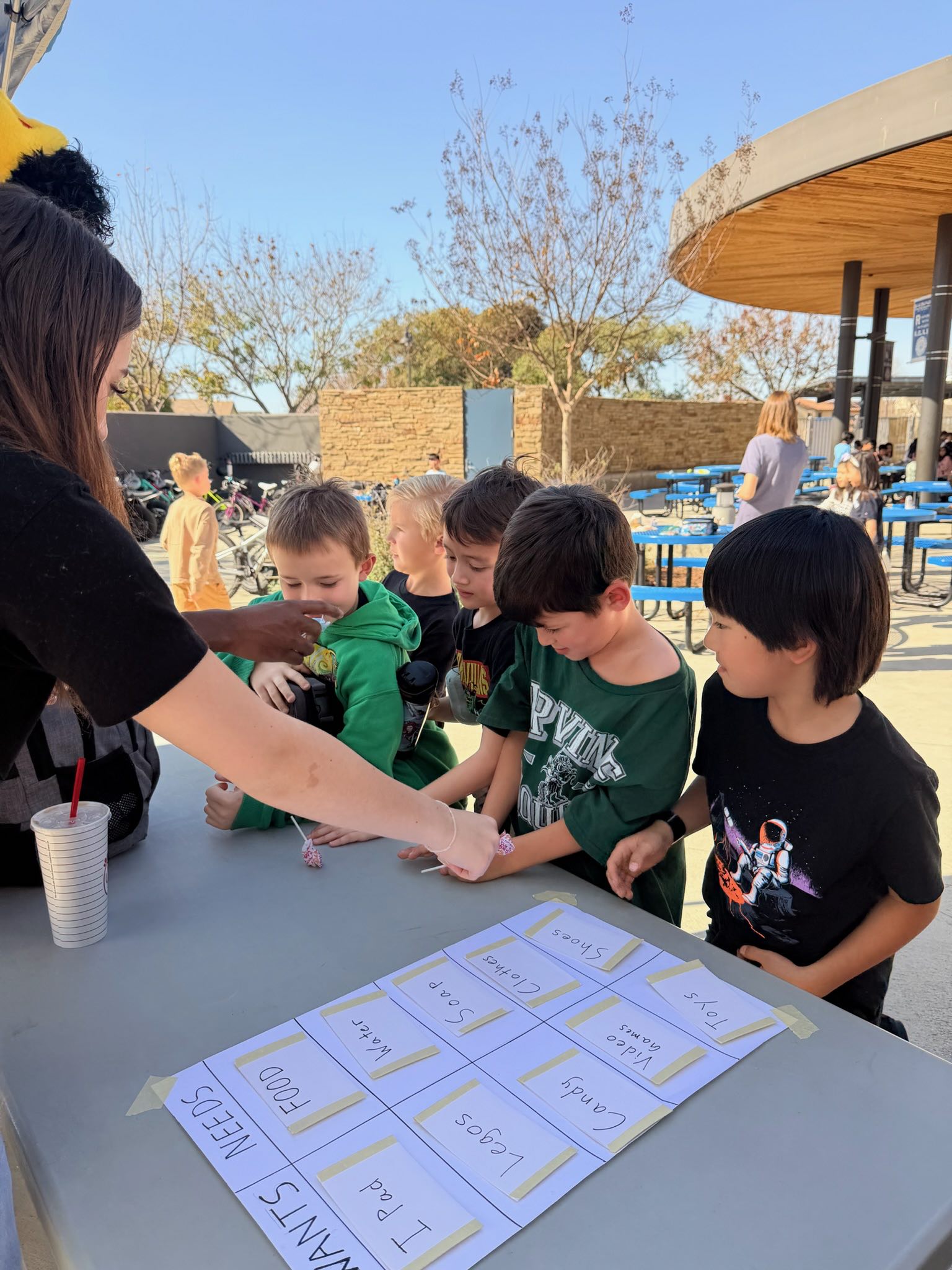
Needs vs. Wants
The difference between survival needs and wants.
Sorting Game. Kids sort item cards into NEED or WANT buckets, then debate the tricky ones, phones, name-brand food, video games.
- Needs keep you alive and safe; wants make life fun but aren't essential.
- Smart spenders pay for needs before wants.
Key takeaways
02
Month 2
Income, Taxes & Budgeting
You don't keep your whole paycheck, and budgets decide outcomes.
Forest Survival Simulation. Groups earn $30, pay income tax, shop for supplies (sales tax included), then face random survival scenarios. What they bought decides if they make it through the night.
- Income gets taxed before you spend it.
- Plan ahead, prioritize needs over wants.
Key takeaways
03
Month 3
Saving & Delayed Gratification
Patience and smart spending beat instant gratification.
Prize Stations. Spend $10 now on small prizes, or hold out for bigger rewards later, savers with $5+ unlock the VIP Prize Box.
- Saving can lead to better rewards.
- Every purchase has an opportunity cost.
Key takeaways
04
Month 4
Credit & Debit
Debit is your money; credit is borrowed money.
Card Simulation. Every kid gets a pretend debit card with a balance and a credit card with a limit. At the end, credit users meet their bill, and interest.
- Debit = your own money. Credit = borrowed money.
- Credit helps, but overspending is risky.
Key takeaways
05
Month 5
Entrepreneurship
A business solves a problem people will pay for.
Mini Shark Tank. Small groups get 5 minutes to invent a business, then pitch to classroom 'investors' who ask questions and vote on funding.
- Explain your idea clearly to win investors.
- Not every idea works, entrepreneurs pitch and fail often.
Key takeaways
06
Month 6
Investing Basics
Putting money to work, and understanding risk vs. reward.
Invest or Don't Invest Game. Kids split $100 across a lemonade stand, a tech startup, real estate, and the stock market. Outcomes are revealed; the strongest portfolio wins.
- Investing means putting money to work so it can grow.
- Higher risk can mean higher reward, or bigger losses.
Key takeaways
Want this at your school?
Start a Branch