Strategic Plan · 2026–2029
Twenty branches
by 2029.
Published October 2026. How a student-led program scales past the students who built it.
20
Active branches
30,000
Attendances a year
6+
Cities served
$0
Cost to schools
Executive summary
By June 2029, Lil Investors aims to run 20 branches across California and reach 30,000 student attendances a year, while staying free for every school and family.
We will get there through four priorities: formalize the organization, scale through a student-led branch model, deepen the program, and build durable funding. The single biggest risk is founder dependence, so this plan sets a deadline to name the next generation of leaders before the founder graduates in June 2027.
Where we stand today
As of October 2026, Lil Investors has delivered 18 workshops and logged 5,000+ student attendances since May 2025.
| Today | |
|---|---|
| Footprint | 4 Irvine elementary branches (Solis Park, Beacon Park, Cypress Village, Woodbury), plus sessions at a Kumon learning center and in Bangkok, Thailand |
| Team | 30 core Portola High students, 40 to 50 volunteers in total, with a named manager for every branch |
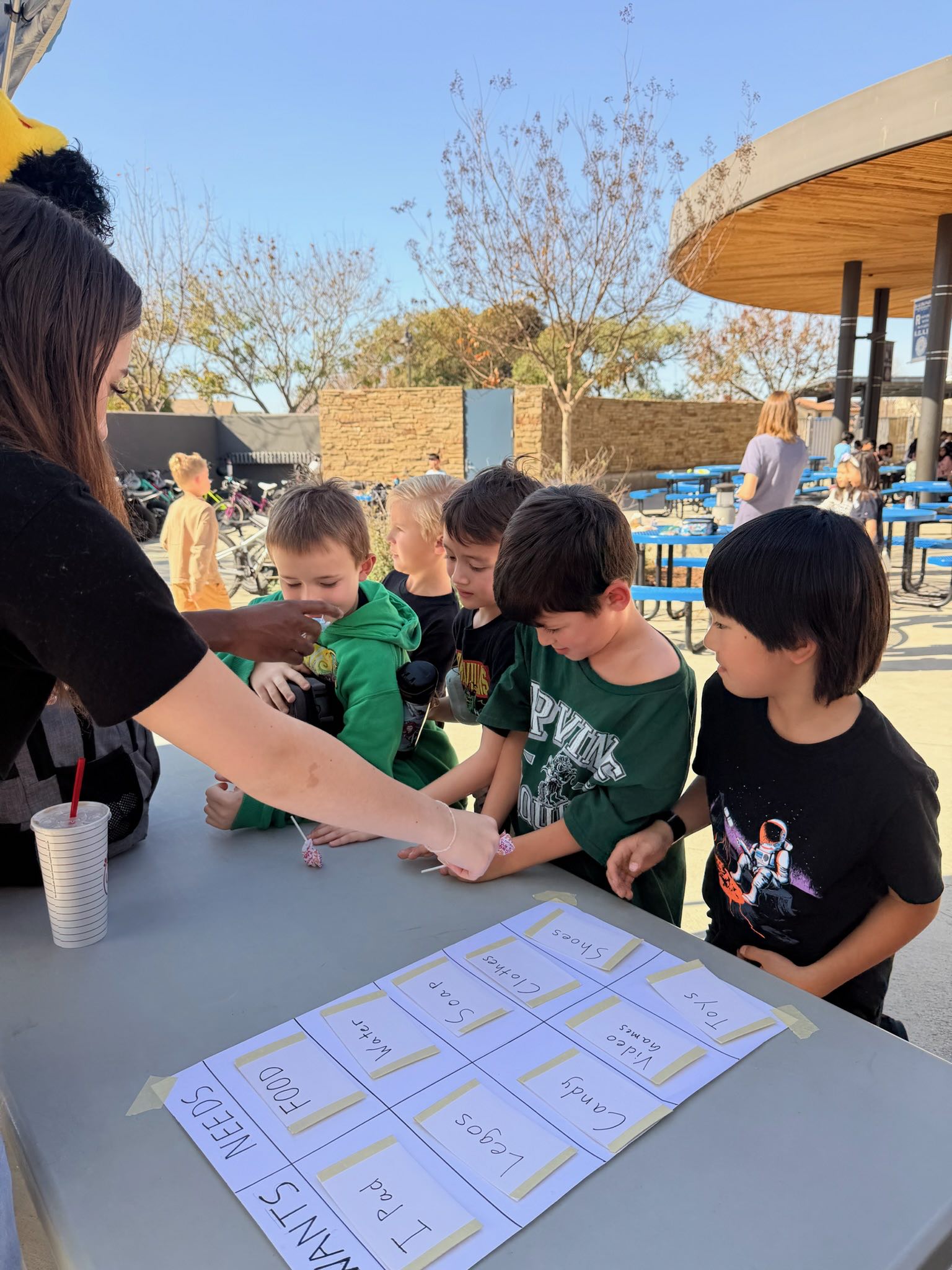
| Program | A six-month curriculum covering needs vs. wants, taxes and budgeting, saving, credit, entrepreneurship, and investing |
| Funding | $650 in total support to date. CCEE serves as fiscal sponsor until our own 501(c)(3) is approved |
| Pipeline | OneUp Financial Education summer camp (June 2027), the Dublin branch launching in 2026, and partnership talks with Junior Achievement and CalCoast Credit Union |
Strategic priorities
| Priority | What it means | Key moves |
|---|---|---|
| 1. Formalize the organization | Become an independent, fundable nonprofit | File Form 1023-EZ and California incorporation (about $330); seat an adult advisory board of at least 3; adopt basic financial controls |
| 2. Scale through branches | Grow by recruiting high school students to run branches at schools near them | Build a “branch-in-a-box” kit (curriculum, training, reporting template); open Dublin as the first branch outside Orange County; target warm introductions over cold outreach |
| 3. Deepen the program | Go beyond 20-minute lunch sessions | Run a 3-day summer camp with OneUp in June 2027; pilot weekend workshops; add a simple pre/post check to measure learning |
| 4. Build durable funding | Move from small gifts to recurring support | Deliver the City of Irvine grant report on time; pursue credit union, CFA Society, and corporate sponsors; launch a “Sponsor a School” package |
Goals and targets
Each year roughly doubles the branch count, assuming about 7 monthly workshops per branch per school year and around 200 to 250 students per session.
| Target | 2026–27 | 2027–28 | 2028–29 |
|---|---|---|---|
| Active branches | 5 | 10 | 20 |
| Cities served | 2 (Irvine, Dublin) | 4 | 6+ |
| Workshops delivered | 35 | 70 | 140 |
| Student attendances | 7,500 | 15,000 | 30,000 |
| Summer camp sessions | 1 | 2 | 3 |
| Annual funding raised | $2,500 | $7,500 | $15,000 |
Milestones that gate the targets
By Dec 2026
File 501(c)(3) and California incorporation; seat the advisory board; spend the City grant and file its report; launch the Dublin branch.
By Mar 2027
Name the succession plan; finish the branch-in-a-box kit.
By Jun 2027
Run the OneUp summer camp in Irvine.
By Jun 2028
Branches running without the founder present on workshop day; first sponsor of $2,500 or more.
By Jun 2029
20 branches; publish an impact report with learning results, not just attendance.
Funding plan
Workshops cost about $15 each in candy and supplies, so a 20-branch network needs roughly $2,000 a year for materials.
| Source | 2026–27 | 2027–28 | 2028–29 |
|---|---|---|---|
| Municipal grants (City of Irvine and others) | $1,000 | $2,000 | $3,000 |
| PTA and school contributions | $500 | $1,000 | $2,000 |
| Credit union and corporate sponsors | $500 | $3,000 | $7,000 |
| Individual donations | $500 | $1,500 | $3,000 |
| Total | $2,500 | $7,500 | $15,000 |
The rest of the budget goes to camps, marketing to recruit branch leaders, and registration and compliance. Until the 501(c)(3) is approved, institutional funds route through CCEE as fiscal sponsor.
Leadership and succession
The founder graduates in June 2027, and the succession plan will be decided by March 2027.
The branch model already reduces founder dependence: every branch has its own manager, and a leadership team covers operations, curriculum, partnerships, and marketing. What remains open is who leads the whole organization after June 2027.
Option 1. Founder stays on as Executive Director from college, with an Irvine-based Program Director running day-to-day operations.
Option 2. Hand off to a new Executive Director chosen from current underclassmen, with the founder moving to the advisory board.
Either way, by March 2027 we will:
Identify at least two underclassmen ready for senior roles and pair them with current officers for the spring semester. Seat an adult advisory board of at least 3 members to provide continuity across student turnover. And write down every recurring process — scheduling, training, reporting — in the branch-in-a-box kit, so no role depends on one person.
What could help and what could hurt
A clear-eyed read of where we are strong and where we are exposed.
Strengths
- Proven model (18 workshops, 5,000+ attendances) at near-zero cost
- A named manager for every branch
- A standardized six-month curriculum
- Strong teacher and PTA endorsements
Weaknesses
- Dependence on the founder
- No 501(c)(3) yet
- Very small budget
- Attendance measured by headcount, not learning
Opportunities
- AB 2927 makes personal finance a statewide priority
- Mentorship and fiscal sponsorship from CCEE
- Partners like OneUp, Junior Achievement, and CalCoast
- Media interest (ABC7)
Threats
- Student volunteers graduate every year
- District policies limit access, for example no media filming on campus
- Competing programs from larger nonprofits
- School schedule changes can cancel sessions
Want to be part of it?
Twenty branches needs twenty student leaders. If you are a high schooler who wants to run one, or an organization that wants to fund one, that is the whole plan in a sentence.